
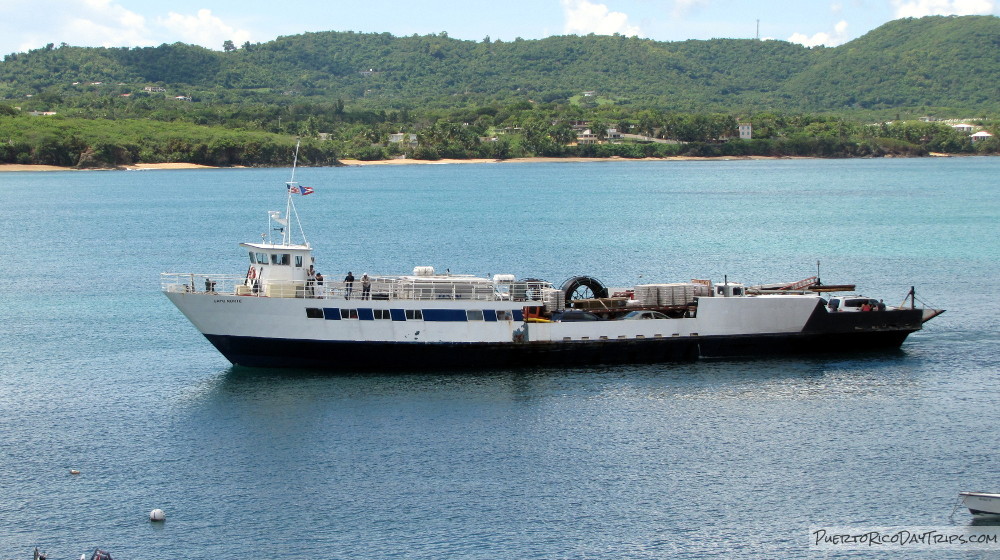
Taking the Cargo Ferry from Ceiba to Culebra or Vieques
5/26 They now again say only residents of Culebra or Vieques can bring cars on the ferry. You need to go to the window and buy them in person, showing your valid license and car registration. No rental cars allowed. However, tourists can be a passenger on the cargo/passenger ferry.
This article is aimed primarily at residents of the out islands of Vieques and Culebra who need to use the cargo ferry to move vehicles and other cargo between the islands of Puerto Rico, Culebra, and Vieques. If you are just looking for a way to get to Culebra or Vieques for the day (or for the start of your vacation over there), read our article about the passenger ferry. For the most accurate and updated info, go to the source- the Official ferry Page. .
Passengers vs Cargo
There are three types of ferries that run between Ceiba/Culebra and Ceiba/Vieques — passenger ferries and cargo, and cargo-passenger ferries. The passenger ferries carry passengers only — no cars or cargo. So they are faster ships. Two types of cargo ferries- one that takes both passengers and cargo (including cars) and one that is cargo/cars only. But, before you get all excited and think that you are going to save a couple bucks by taking your rental car over to Culebra or Vieques — think again.
The cargo ferries for vehicle transport are not intended for tourists. There is limited room that locals need for transportation and supplies. In order to buy a vehicle cargo ticket you need to show a vehicle registration. They still say no rental cars allowed on ferry. But you can use the cargo/passenger ferry as passenger transport.
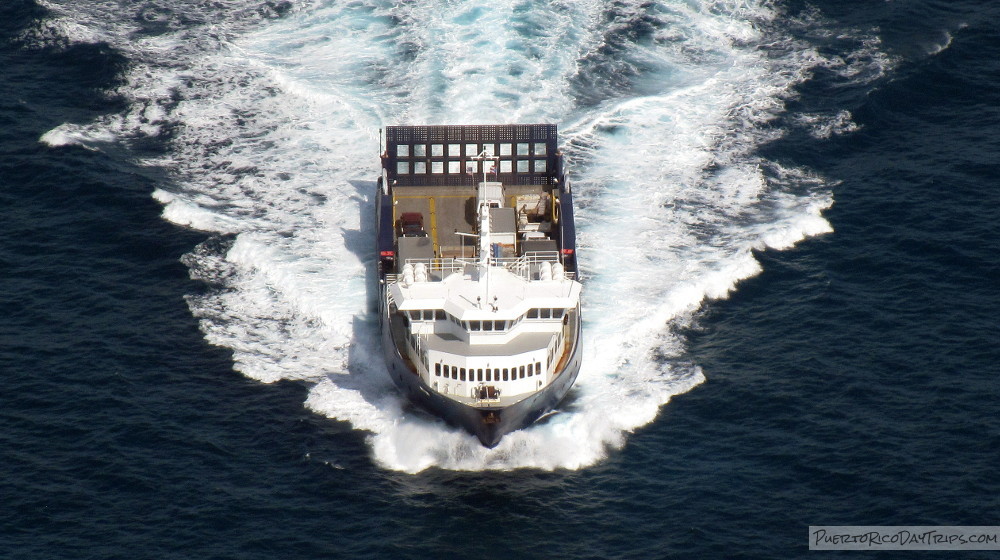
Cargo Ferry Basics
There are cargo ferries that run between Ceiba and Culebra and between Ceiba and Vieques. You need to make a reservation in order to get a vehicle on the ferries. They sell out quickly, so book as far in advance of your trip as possible. This can only be done in person at the dock. If you want to be a passenger on a cargo-passenger ferry, those tickets can be purchased online ahead of time or at the ticket window.
Passengers are permitted on the cargo-passenger ferries, though they are usually slower boats than the passenger ferries, and there are fewer seats. The trip can take 60-90 minutes depending on which cargo/passenger ferry you’re on, and the weather. Adverse weather conditions may alter the schedule.
If the gasoline supply truck is on the cargo ferry, passengers will not be allowed on that ferry (only the drivers of the vehicles on that ferry). Also, when the cargo ferry is full of its cargo, it may leave (not wait for posted departure time).
Cargo and Cargo/Passenger Ferry Schedule
For the most accurate and updated info, go to the source- the Official ferry Page. for current times.
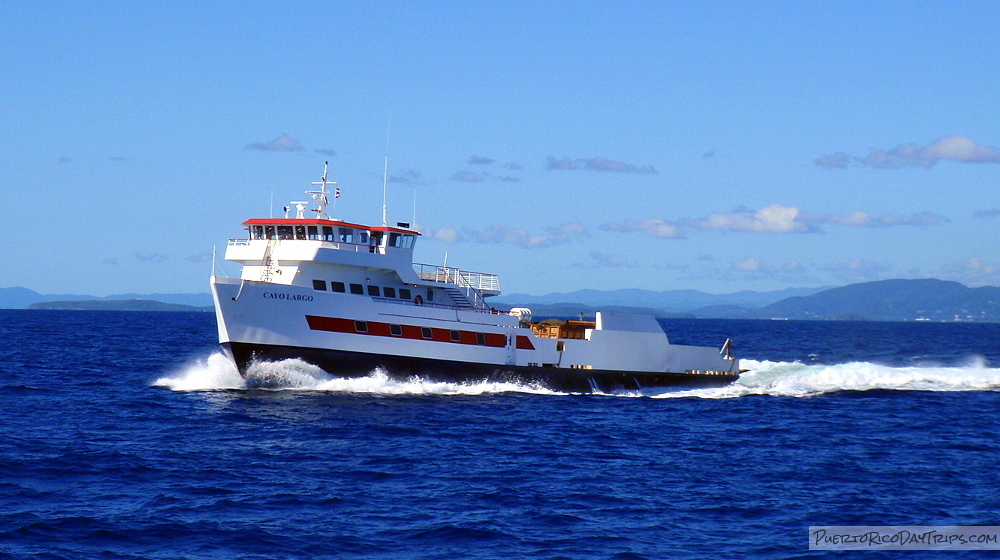
Cost of Vehicles for the Cargo Ferries or Cost of passengers on the Cargo-passenger Ferry
See the PRFerry webpage for current prices for vehicles on the ferry (price changes are supposed to start 2027). For just purchasing passenger tickets for the cargo-passenger ferry ahead of time, that can be done online at the ferry ticket page (best to use their APP). You can still buy tickets in person, at the ferry terminal ticket window. Only part of the tickets are sold online, so if it sells “sold out”, there should be tickets available in person. Most of these are reserved for residents only, but they may have some available for tourists. 1/24 Culebra has started adding on a $2 “Environmental Preservation” fee for each non- residents person.
Making a Car Reservation for the Cargo Ferry
Reservations are required for cars/cargo on the cargo ferry. Reserving a car/cargo spot is limited residents or Vieques or Culebra car owners, who must show a valid driver’s license and car registration to purchase vehicle tickets. You may not purchase a vehicle ticket for a rental car. Car/cargo space tickets can only do that at the ticket window.
Getting Your Stuff onto the Cargo Ferry
You must be at the loading dock early on your reserved day and time or you will lose your spot. They recommend 1 hour before departure. If you are late, they will NOT hold the ferry for you. When you arrive at the ferry dock you have to check-in at the window where they validate your reservation. Bring your vehicle to the ship and someone will tell you when/where to load. These workers usually ask your name and compare it to the reservation list. Once you are parked on the ferry, they may need to you to hang around until everyone is loaded, because they sometimes have to jockey the cars/trucks around to fit everyone.
Cargo trucks get priority, so even with a reservation, passenger cars may get bumped if a cargo truck needs a spot, which can leave you stranded and your plans totally messed up.
It takes about 1 hr for the cargo ferry to get to Vieques. It takes about 1.5 hrs to get to Culebra .

Directions to the Ceiba Ferry Terminal from the San Juan Area
The Ceiba ferry Terminal, as well as the Ceiba Airport, is located in the old Roosevelt Roads Naval Base in Ceiba. If you already know where the Ceiba Airport is, then finding the Ceiba Ferry Terminal will be easy for you.
Drive-time from the San Juan (SJU) Airport to the Ceiba Ferry Terminal is about 75-90 minutes.
If traveling to the ferry terminal from the San Juan area, you’ll want to take Route 26 east to Route 66 east to Route 3 east (toward Fajardo). Route 66 ends on Route 3 in Río Grande, so you’re taking Route 66 to the end. Note that Route 66 is a toll road, and an AutoExpreso transponder is required for the tolls.
Continue east on Route 3 toward Fajardo. Once in the Fajardo area, Route 3 becomes Route 53. Once you’re on Route 53, you’ll want to take Exit 2 at KM 1.4 (which is before the first toll booth). This is the exit for the Puerto del Rey Marina and the Ceiba Airport. At the end of the exit ramp, turn left under Route 53, then continue straight. This will put you back on Route 3 heading south. Then, really all you need to do is follow the signs for the Puerto del Rey Marina and the Ceiba Airport. Continue on Route 3 past the Puerto del Rey Marina on your left.
You’ll continue on Route 3 to KM 52.4, where you’ll turn left onto Tarawa Drive. Landmarks here include a solar farm on the right, and the “Bienvenidos Ceiba” sign in the photo above. Continue straight on Tarawa Drive until you arrive at the guardhouse at the entrance to the naval base. If there is a guard, just tell them that you are going to the ferry.
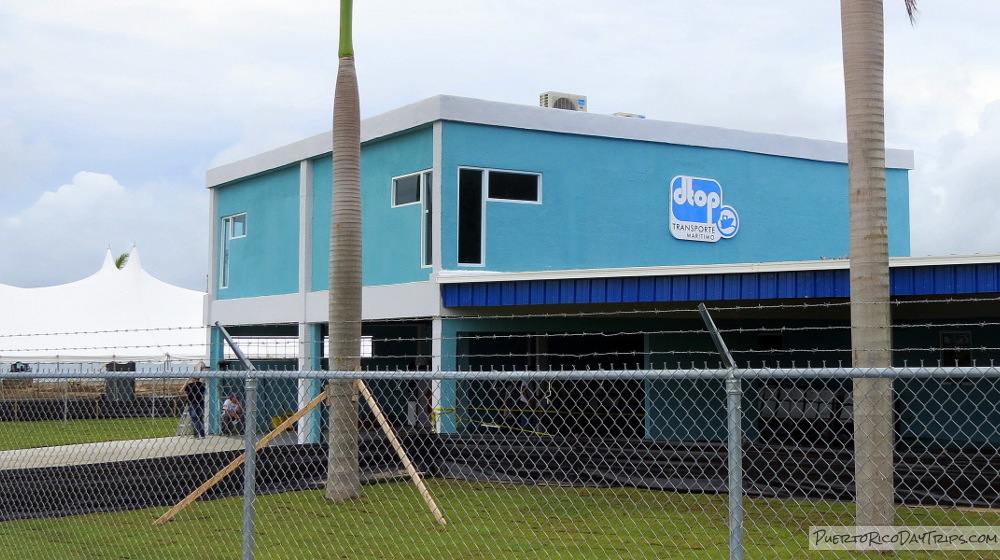
Once through the gate, follow the brown “Ferry” signs — At the first V, you’ll go left onto Forrestal Drive. At the second V, you’ll follow the road as it curves to the left. At the third V, go right. Then, finally, turn left onto Marina Drive. Continue on Marina Drive until you come to the parking area and blue DTOP ATM building on your right.
There is a parking lot further down the road from the ferry that will provide transportation to the ferry in a van. They charge about $15 per 24 hr. I suggest you do not park on the side of the road, they do give out parking tickets.
Ticket window opens 1 hr before each scheduled trip.
Click on a placename below to view the location on Google Maps ...
Puerto Rico Day Trips LLC assumes no responsibility regarding your safety when participating in the activities described in this article. Please use common sense! If your mother or that little voice in your head tells you that you are about to do something stupid … then don't do it!