
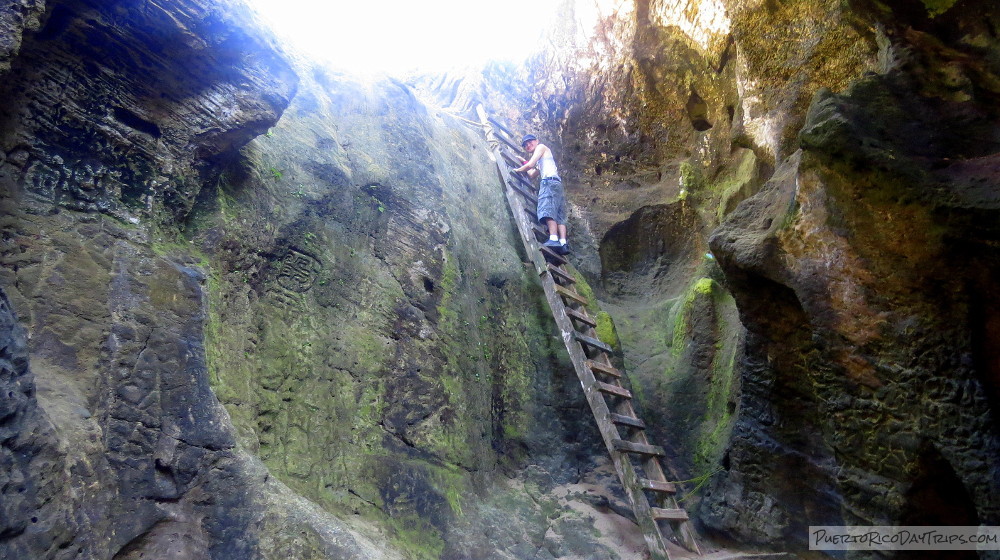
View Petroglyphs and beautiful rock arches at Cueva del Indio in Arecibo
2020 Note- In Feb, 2017, the Department of Natural Resources has removed the ladder from the cave, for safety reasons. Without the ladder to get down into the cave, you can’t really see the petroglyphs. Not that I would recommend doing it, but if you are able and daring, there is a crack/crevice in the wall in the corner of the flat area where the cave entrance was, that will get you down into the cave. But it is still worth a visit just to see the beautiful coastline and rock formations in this area!
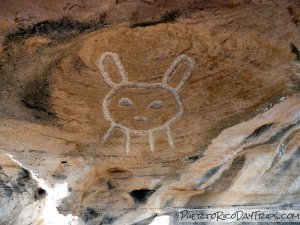
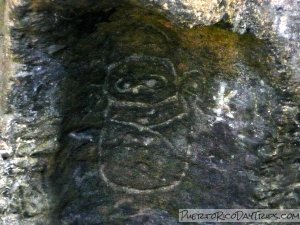
We have been all over PR, and a visit to La Cueva del Indio (Cave of the Indian) and the area, is still one of my favorite places. The cave itself is full of petroglyphs, made by the original inhabitants of PR. These petroglyphs pre-date Columbus’ arrival to Puerto Rico in 1493, and were probably made many centuries earlier. Cueva del Indio is said to contain the largest number of petroglyphs found along the coastal zone. In 1992, the Planning Board of Puerto Rico designated Cueva del Indio as a Natural Reserve. Since then, the cave is managed by the Puerto Rico Department of Natural and Environmental Resources (DNER). They and now a local group (https://www.facebook.com/DCI681) try to maintain it for conservation purposes. Unfortunately, there has been some vandalism of these beautiful historical carvings. Some idiots decided they needed to mark the walls But, thankfully, even after all these years, the petroglyphs had withstood the natural and human forces, and are still around today for us to enjoy.
Our Visit
Getting to the cave and walking around the area to see the different rock eyes and arches is a bit treacherous. Along the entire area, you will be walking on rough, exposed limestone, which is sharp – take care not to fall! You should wear sturdy shoes – sneakers or something – not flip-flops or high heels. You will be looking over a ledge, down about 25 feet into the cave to try and see the petroglyphs – be mindful of your footing. This cave is open to the sky, so you can see into it. Due to the color of the rocks and algae growing on the walls, the petroglyphs are hard to see last we went.
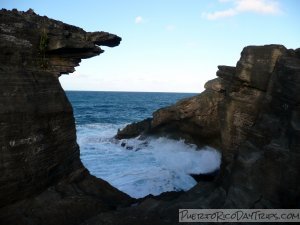
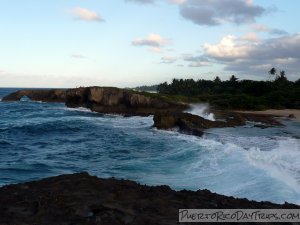
Even if you can’t get down into the cave, You can still walk all around on the rocks to see the views and watch the beautiful Atlantic waves crash on the beaches. Walking on the rocks to the east, you will just enjoy more and more wonderful views in this area. There are huge cliffs, eyes, arches, caves and even a natural bridge and nice sandy beach area (though not good for swimming!). It is just a beautiful area.
In the past we had been told by locals about how the area is not really "safe" and that your car may be broken into if you park on the road. But now there is a big local movement going on the make sure access is free and available. They have now made “parking” areas along the street that you can use for free (at km 7.6 or so). I would still make sure not to leave anything of value in the car! There is also a couple parking spots on the side of the road at Km 8.2 that leads right to the beachy area closer to the arch. If you feel more comfortable, you can always park in the lot at km 7.8, but that costs a lot ($10 per person, not car!!) but it does offer easier access to get to the caves. If you choose to park on the road, make sure you are totally off the road and are not impeding traffic in any way.
There is no "admission" price for the cave per se. It’s just a cave on the edge of the sea. You can park on the side of the road and walk in via the beach for free. Note- it is not the easiest walk, better during low tide! After walking eastward on the beach past the houses, you will want to follow paths up to the right by the “chair” or when you get to the rocks further up, or you can climb up the rocks (which is only doable for fit people, but not easy and definitely NOT for everyone!). Even though there is a fence, this flat area parallel to the coast is public domain. You can also try the parking area by km 8.2 and then walk to the left on the rocks to the cave. For the paid parking lot- If you want to park in the lot on the ocean side of the road, or even access that area by crossing this business property (as if you parked elsewhere), the owners charge you $10 per person. Their gate is open from 10a-5pm.
Since it’s not a formal "park", there are no set hours that the cave is open, but I’d suggest going during daylight hours, otherwise you won’t be able to see anything! Cueva Del Indio ocean side paid parking lot only open 10am- 5pm. If you park elsewhere, you can access the area outside those hours.
Allow about at least 1 hr to see the cave, petroglyphs and explore the beach and surrounding areas.
Take Route 22 and exit at Route 10 North (toward the ocean). Turn right onto RT 2, go over bridges. At the light, make a left and then a quick right to get onto Road 681 (you’ll see signs for 681). Follow Road 681 until KM 7.6, where you will see signs for the Nature Reserve on the ocean side and park on the grass on the other side of the road. For the paid parking area, it is at km 7.8 or so
Travel time from the San Juan area is about 90 minutes one way.
Click on a placename below to view the location on Google Maps ...
Puerto Rico Day Trips LLC assumes no responsibility regarding your safety when participating in the activities described in this article. Please use common sense! If your mother or that little voice in your head tells you that you are about to do something stupid … then don't do it!